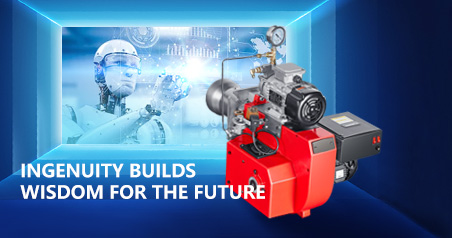
Identify when your combustion system needs an upgrade, and learn how to select the right high-performance burner to achieve energy efficiency and environmental goals.

• • Executive Summary: What You'll Learn
✅ 5 key signals indicating that your burner needs to be upgraded
✅ Upgrade benefit analysis: What improvements can be obtained through device updates
✅ Compliance requirement: Understand environmental regulations and standards
✅ Product selection: Choose the appropriate burner type for your application
Part 1: Why Upgrade Your Industrial Burner?
In today's competitive industrial landscape, the decision to upgrade existing combustion equipment is typically driven by three primary factors: economics, regulation, and reliability. Let's examine each in detail.
1.1 Energy Efficiency & Cost SavingsThe Problem: Older burners often require excessive air to maintain stable combustion, which inadvertently carries heat away through the stack—wasting valuable energy and increasing fuel costs.
The Solution: Modern burner designs, such as those utilizing rapid-mix technology and optimized air-fuel ratio control, can operate at significantly lower excess air levels while maintaining good combustion efficiency.
Technical Advantages Comparison:
| Metric | Older Burners | Modern Burners | Improvement |
| Excess Air Coefficient | 25-40% | 10-15% | Reduced stack losses |
| Combustion Efficiency | 82-88% | 92-96% | Complete fuel utilization |
| Electricity Consumption | High-efficiency motors | Optimized design | Reduced power consumption |
Additional Benefits of Upgrading:
• Reduce maintenance costs: Modern components are more reliable and require less maintenance
• Improve production stability: Consistent heating improves product quality
• Reduce downtime: Reliable equipment reduces unexpected failures
1.2 Environmental & Regulatory ComplianceThe Challenge: Emission regulations are continuously being improved. Older combustion technology is a primary source of NOx and CO emissions, putting facilities at risk of:
• Regulatory fines and penalties
• Forced shutdowns during inspections
• Increased permitting requirements
• Community pressure and reputation damage

The Solution: Modern low-NOx burners employ advanced techniques—such as flue gas recirculation (FGR), staged combustion, and optimized air-fuel modulation—to achieve lower NOx emission levels.
China Emission Standards Reference:
| Region | NOx Emission Limit | Older Burners | Upgraded |
| Key Regions | < 50 mg/m³ | 80-120 mg/m³ | < 30 mg/m³ |
| General Areas | < 80 mg/m³ | 80-120 mg/m³ | < 30 mg/m³ |
Bonus Benefit: Meeting strict emission standards doesn't just avoid fines—it also helps companies meet Environmental, Social, and Governance (ESG) targets, reducing the overall carbon footprint and enhancing corporate reputation.
1.3 Operational Reliability & Safety: Protecting Your InvestmentThe Hidden Costs of Aging Equipment:
• Unexpected downtime from equipment failure
• Higher maintenance costs for obsolete parts
• Safety risks from outdated control systems
• Insurance premium increases
Modern Safety Features:
New equipment is equipped with advanced safety control devices, including automatic safety interlocks, over-temperature protection, etc., which comply with relevant Chinese safety standards.
Part 2: When Should You Upgrade? 5 Critical Signs
Identifying when equipment needs an upgrade is an important prerequisite for purchasing planning. Here are 5 telltale signs that indicate it's time to consider replacing with new equipment.
Sign #1: Rising Fuel Consumption with Stable OutputThe Red Flag: If your production output remains the same but fuel bills are climbing steadily, or if thermal efficiency drops noticeably (such as by 5–10%), your burner's performance is likely degrading.
Quick Test: Compare your current fuel consumption per unit of output with historical data. An increase of 5% or more warrants investigation.
Common Causes:
• Worn atomizers (in oil burners)
• Degraded air-fuel ratio control
• Fouled heat exchangers
• Inaccurate sensors and controls
Sign #2: Surging Maintenance CostsThe Rule of Thumb: When annual repair and maintenance costs exceed 5-10% of the cost of a new burner, or if spare parts have become obsolete and difficult to source, replacing equipment is the logical choice.
Sign #3: Inconsistent Heating or Process Quality IssuesThe Symptoms:
• Difficulty maintaining consistent temperatures
• Soot buildup in boiler tubes or heat exchangers
• Inability to handle load fluctuations without frequent cycling
• Product quality variations in temperature-sensitive processes
The Root Cause: The burner struggles to maintain the correct air-fuel ratio across varying load conditions, leading to incomplete combustion and reduced heat transfer efficiency.
Sign #4: Upcoming Regulatory PressuresThe Timeline Challenge: Emission regulations typically have implementation timelines. If your current emission levels cannot meet upcoming standards, planning equipment upgrades now allows for:
• Budget planning and approval
• Avoiding rushed, emergency compliance projects
• Selecting the most appropriate technical solution
Sign #5: End-of-Life Equipment (10-20 Years Old)The Lifecycle Reality: While a boiler pressure vessel can last 30+ years, the actual lifespan of an industrial burner is typically 10 to 20 years due to:
• Mechanical wear (motors, pumps, fans)
• Control system obsolescence
• Technology advancement gaps
• Safety standard evolution
Upgrade Opportunity: Replacing the burner can extend the overall equipment life by another decade or two at a fraction of the cost of a full boiler replacement.
Part 3: How to Choose the Right Burner Product
Choosing the right burner product is critical for meeting production requirements.
Step 1: Define Application RequirementsWhat to Assess:
• Required heat output
• Boiler or furnace type
• Fuel type and availability
• Load variation patterns
• Emission compliance requirements
Step 2: Select Burner TypeMain Burner Types:
1. By Fuel Type
• Gas Burners: For natural gas, LPG applications
• Oil Burners: For light oil, diesel, kerosene
• Dual Fuel Burners: Flexible operation with primary and backup fuels
• Waste Oil Burners: For recycling used lubricants and industrial oils
2. By Emission Level
• Standard Burners: For general emission requirements
• Low NOx Burners: For strict emission areas
• Ultra-low NOx Burners: Achieving < 30 mg/m³
Determine Technical SpecificationsKey Technical Parameters:
1. Capacity & Turndown Ratio
• Calculate required capacity based on peak load
• Select turndown ratio (typically 5:1 to 10:1) based on load variability
2. Control System Selection
• Positioning: Independent servo motors for fuel and air ensure perfect ratio at every firing rate
3. Safety Configuration
• Flame detector type
• Ignition system configuration
• Safety interlocks
Part 4: Career Burner Product Line
Career Burner offers a comprehensive line of industrial burners to meet various application needs.
4.1 Product Series OverviewIndustrial Gas Burner Solutions• GX Series: 50 kW to 7000 kW, ideal for natural gas and LPG
• Features: High efficiency, low emissions, wide turndown ratio
Industrial Oil Burners• Light Oil Burning Units: 24 kW to 1416 kW, with single-stage, two-stage, or modulating control
• Features: Reliable combustion, precise control, low energy consumption
Waste Oil and Low Emission Models
•
FX Series: Specifically for waste oil recycling
•
Ultra-low NOx Series: Achieving < 30 mg/m³
4.2 Quality AssuranceEvery Career Burner undergoes:
• ISO 9001:2015 quality management compliance
• 100% pre-shipment combustion testing
• Danfoss-validated components and subsystems
• Zero-defect manufacturing processes
4.3 Global Support & Fast DeliveryOur commitment to your project timeline:
• In-stock models: 7-day shipping worldwide (DDP/DAP terms)
• Custom orders: 2.5 weeks delivery
• Global spare parts network
• 24/7 technical support
4.4 Industries ServedIndustries We Serve:
• Textile dyeing and finishing
• Waste incineration
• Industrial boilers
• Food and beverage processing
• Chemical manufacturing
• Metalworking and heat treatment
Conclusion: Your Next Steps
An industrial burner upgrade is a strategic investment that transforms an aging asset into a high-performance, compliant, and cost-saving powerhouse.
✅ Reduced fuel consumption
✅ Compliance with strict emission regulations
✅ Extended equipment life
✅ Enhanced safety and reliability
Ready to Take Action?
Path 1: Get Product Recommendations
[Contact Us for Technical Solution]
• Describe your application requirements
• Get product selection recommendations
• Receive customized quotation
Path 2: Talk to a Technical Expert
[Schedule a Free Consultation]
• Discuss your specific requirements
• Get answers to your technical questions
About Career Burner
Our Mission: To deliver smart, efficient, and reliable combustion solutions that help industries worldwide achieve their energy efficiency and environmental compliance goals.
Founded: 1995(20+ years of experience)
Products Delivered: 258,000+burners worldwide
Certifications: ISO 9001:2015,Danfoss-validated components
Global Reach: 诺Products shipped to 80+ countries with 7-day delivery promise
Contact Us:• Email: sales@careerburner.cn
• Phone: +86-13690622890
• Website: https://www.careerburner.com